Inside a real studio: the Electronic Music Essentials masterclass at Wider Sounds Ibiza
Four days, four to six students, one hybrid studio in the hills of Ibiza. A look inside the Electronic Music Essentials masterclass at Wider Sounds.

Christopher De Spiegeleire
Founder & tutor — Chris Robleda. Plays Tomorrowland, tours Asia and mixes for One World Radio.

Most production courses teach you software. They hand you a preset, show you a shortcut, and call it a day. The Electronic Music Essentials masterclass at Wider Sounds Ibiza is built on a completely different premise: that real growth as an electronic musician comes from being inside a real studio, working with real gear, guided by people who actually know how it all connects.
From Monday 4 May to Thursday 7 May 2026, a small group of 4 to 6 students gathered at Wider Sounds — a recording studio and sonic retreat nestled in San Lorenzo, Ibiza — for four days of immersive, hands-on learning. No generic tips and tricks. No classroom-only theory. Just synthesis, signal flow, sequencing, mixing, and everything in between — done properly.

Not a software course. A studio immersion.
The intention behind this masterclass is clear from the start: go deeper than the surface. The focus is on how sound is built, captured, sequenced, shaped, and finished inside a real hybrid recording environment — one that combines analog synths, modular gear, outboard processing, microphones, and Ableton in a single connected workflow.
Three pillars run through everything.
Creative insight — how professionals make decisions: choosing sounds with intention, building emotional arcs, simplifying arrangements, and resisting the trap of endless tweaking.
Hybrid workflow — a hands-on understanding of routing, patching, MIDI, sequencing, and how analog and in-the-box production can work together as one fluid system.
Professional habits — session discipline, stems export, metadata, cataloguing, rights awareness, and how to present work clearly and credibly in the music industry.
The positioning is intentional: this is a premium masterclass rooted in real studio practice, not a classroom exercise.
How the days were structured
Each day ran four teaching blocks, with creation woven in throughout — not saved for the end.

10:30 – 11:45 · Block 1
12:00 – 13:15 · Block 2
13:15 – 14:00 · Lunch and networking
14:00 – 15:15 · Block 3
15:30 – 17:00 · Block 4
The method combined demonstration, guided listening, hands-on creation, peer critique, and mentoring. Every concept was immediately linked to sound and practical application — not left as abstract theory.
One shared Ableton session evolved across all four days, with students contributing sounds, patterns, recordings, and arrangement ideas into the same collective project. Daily exports gave everyone a clear archive of what was made — material to take home and keep developing.
Day by day: what was covered
Day 1 — Studio routing, signal flow and sound synthesis
The foundation day began not with software, but with the studio itself: signal flow logic, cable types, interface routing, monitoring, outboard integration, and gain staging. Understanding the anatomy of a professional hybrid studio before touching a single instrument.

From there, the group moved into synthesis fundamentals — waveform families, oscillators, filters, envelopes, LFOs, modulation, subtractive synthesis — across the studio's full range of analog and digital instruments. The day closed with a modular demo and first hands-on recordings into Ableton, starting the shared class project.
Learning outcome: a solid understanding of the studio infrastructure and the building blocks of sound, before production begins.
Day 2 — Production, arrangement, sequencing and recording
With the foundation in place, Day 2 was about turning raw material into music. Ableton workflow, MIDI routing, and sequencing logic came first — including an OXI One presentation focused on variation and performance thinking.
Then arrangement: how structure becomes storytelling rather than loop repetition. Markers, track families, transitions, automation as expression. Followed by sampling and resampling — pulling from original recordings, resampling synths and textures, and integrating tools like Splice creatively.
The day ended with recording basics for electronic producers: microphone types, placement, vocal and percussion capture, and how live-recorded sound fits into an electronic workflow.

Learning outcome: moving from technical setup into active music-making with a clear production framework.
Day 3 — Mixing, creative sound design and finishing
The shift from making ideas to shaping them. Day 3 was about listening more carefully — hearing what a track actually needs rather than applying processing by habit.
Critical listening and mixing essentials came first: balance, EQ, compression, depth, stereo image, and mix translation. Then creative sound design and sonic identity — layering synths and recorded sources, building texture, shaping contrast, developing a personal palette rather than defaulting to presets.
FX chains and hybrid processing followed: the order of processing, sends vs inserts, pedals, outboard, and plugin chains. The day closed with loudness, pre-master mindset, and finishing — headroom, LUFS awareness, and practical strategies for getting from sketch to a convincing bounce.

Learning outcome: understanding how to create depth and coherence, and how to finish work without over-processing or losing the original idea.
Day 4 — Music business, project lab and showcase
The final day connected creativity to professional practice. Rights, publishing, splits, metadata, and collaboration etiquette. File management, stems export, naming conventions, version control, and how to organise a music catalogue professionally — including a DISCO-oriented workflow.
Then the Project Lab: targeted one-on-one feedback on each student's material — troubleshooting, arrangement decisions, sonic direction, and what to keep developing after the masterclass ends.
The week closed with a listening session and showcase: works in progress presented to the group, peer feedback, reflection on the process, and final guidance for what comes next.

Learning outcome: clearer artistic direction, stronger professional habits, and a concrete roadmap for continuing the work.
What students took home
Beyond the experience, participants left Ibiza with something tangible.
Original sounds, recordings, sequences, and production sketches made during the week
A clearer understanding of synthesis, routing, recording, arrangement, mixing, and finishing
A practical framework for session discipline, stems export, and rights awareness
Confidence to continue developing music independently — with a real professional mindset
And for those who want to keep the momentum going, an optional online follow-up session in September can be added, to review how the work evolved after the masterclass.
The core promise of Wider Sounds is simple but meaningful: students don't only learn tools — they learn how a professional studio artist thinks, listens, organises, and develops work.

Why this format works
Four to six students. A real hybrid studio. Four focused days. This isn't a coincidence — it's the point. The small group size means everyone gets direct access, direct feedback, and direct experience. There's nowhere to hide, and nowhere to be passive.
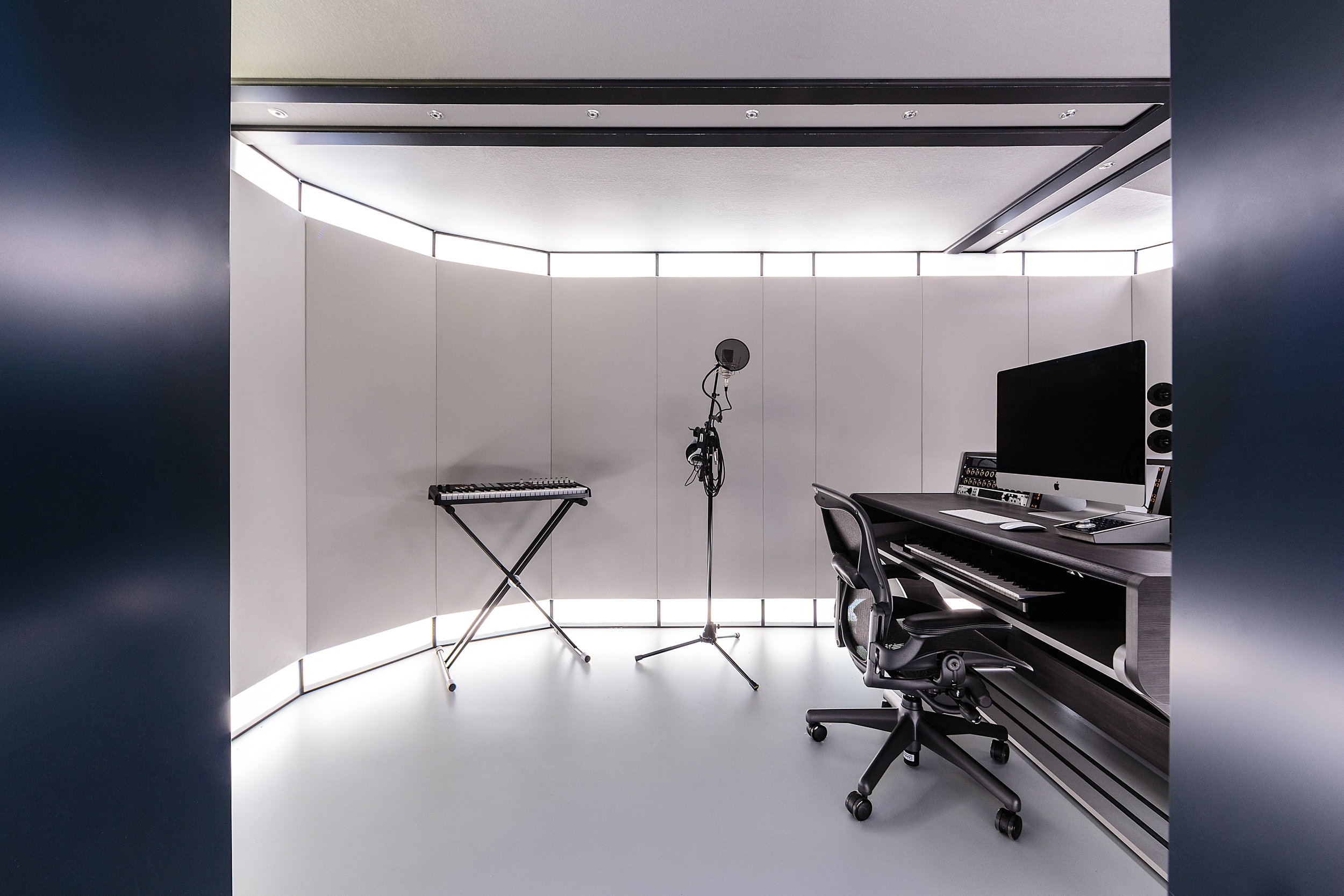
The Wider Sounds studio in San Lorenzo brings its own energy: analog synths, modular systems, outboard processors, professional microphones, and Ableton all working together in one room. That environment is part of the teaching.
.jpg)
Keep reading
All articles- 01Trips
Walls Were Vibrating: Inside the DJ Trip to Ibiza
Edward Van den Bulck · July 15, 2026 · 4 min read
- 02Students
Class of 2024 — 25: a year on the decks
Edward Van den Bulck · May 5, 2026 · 5 min read

- 03Technique
Your first mix: the four habits that actually matter
Edward Van den Bulck · April 10, 2026 · 6 min read
- 04Technique
Harmonic mixing: useful tool or producer cosplay?
Christopher De Spiegeleire · April 2, 2026 · 5 min read
- 05Career
Pitching your first release: what labels actually want
Edward Van den Bulck · March 20, 2026 · 7 min read


What's next
Ready when you are.
Walk through the programme in 30 minutes. Free, no commitment. Or pick a time for a 1-on-1 call.